If your AC in Springfield turns on, runs for a minute or two, shuts off, then restarts again and again, that’s short cycling. It’s not just annoying—short cycling is one of the quickest ways to spike energy bills, ruin humidity control, and put the compressor (your most expensive component) at risk. The good news is many causes are fixable once you narrow down whether it’s an airflow issue, a thermostat/control issue, or a refrigerant/electrical problem.
What Short Cycling Looks Like (and Why It’s a Big Deal)
A normal AC run cycle is long enough to cool the home and pull moisture out of the air. With short cycling, the system stops early, restarts repeatedly, and never reaches steady efficiency. That creates three problems fast:
Higher electric bills: each startup pulls a heavy electrical load
Poor comfort: temperatures swing and the house can feel clammy
Compressor stress: repeated starts overheat windings and accelerate wear
If short cycling continues, you’re not just “wearing the system faster”—you’re increasing the odds of a major breakdown during the hottest part of the season.
Start Here: 4 Quick Checks You Can Do Safely
Before you assume the worst, knock out the most common causes.
1) Replace the air filter
A dirty filter is a top trigger. It restricts airflow and can cause overheating or coil freeze—both lead to short cycling. If it looks dusty or gray, replace it.
2) Check thermostat settings and placement
Make sure the thermostat is set to COOL and isn’t being overridden by a schedule. Also consider placement: if it’s near a sunny window, kitchen heat, or a supply vent, it can read “cool” too quickly and shut the system down early.
3) Clear airflow around the outdoor unit
Springfield summers are hard on outdoor units—grass clippings, leaves, and fencing can block airflow and drive high pressure. Keep 2 feet of clearance around the condenser and remove debris from the coil guard.
4) Look for ice
If you see ice on the indoor coil or refrigerant line, turn cooling OFF and set the fan to ON to thaw. Ice strongly suggests airflow restriction or low refrigerant. Don’t keep restarting it.
If the unit still short cycles after these steps, you likely need a technician to test refrigerant pressures and electrical components.
The Most Common Causes of Short Cycling in Springfield Homes
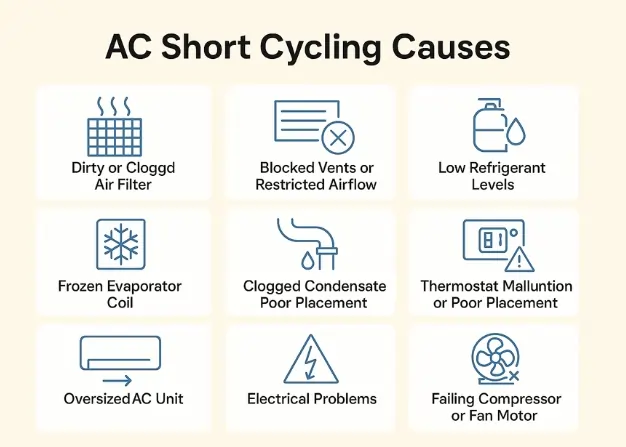
Restricted airflow (filters, returns, blower, coil)
Airflow is the #1 driver. When the system can’t move enough air, coil temperatures drop or pressures change and safety controls can shut the system down. Besides filters, common airflow blockers include closed returns, blocked vents, dirty coils, weak blower motors, and duct restrictions.
If one room is always hotter and the system cycles a lot, duct issues or blower performance may be involved—not just the filter.
Thermostat or sensor faults
A thermostat can short cycle a perfectly good system if it’s miscalibrated, failing electrically, or placed in a “bad reading” spot. You’ll often notice cycles getting worse at certain times of day (sunlight) or after cooking/showering.
Low refrigerant or a leak (pressure imbalance)
Refrigerant doesn’t “run out.” If it’s low, it’s usually leaking. Low charge can cause freezing and unstable pressures that trigger quick shutoffs and restarts. You may also notice gradual loss of cooling over weeks, rising bills, or hissing/oily residue.
Important: adding refrigerant without fixing the leak is a temporary band-aid and often leads to repeat cycling and compressor risk.
Electrical/component failures (capacitor, contactor, control board)
Weak capacitors, pitted contactors, or failing controls can interrupt compressor or fan operation, creating rapid on/off behavior. Warning signs include buzzing, clicking, burning smells, or breaker trips. This is not DIY territory—capacitors can hold a dangerous charge.
Oversized AC equipment
Oversized systems cool the thermostat area too fast, shut off early, and restart repeatedly. They also remove less humidity, so the home can feel sticky even when temperatures drop. If your system has short cycled since installation, sizing may be a root cause.
When Short Cycling Becomes a “Stop Running It” Situation
Turn the system off and schedule service if you notice:
burning smell or electrical odor
repeated breaker trips
loud buzzing/grinding/screeching
ice buildup that returns after thawing
the outdoor fan or compressor struggling to start
These signs can indicate conditions that damage the compressor or create electrical hazards.
Conclusion: Fix the cause early to protect the compressor
Short cycling in Springfield is one of the fastest ways to shorten AC lifespan. Replacing a dirty filter and clearing airflow solves many cases, but if cycling continues, the root cause is often refrigerant imbalance/leaks, electrical component failure, thermostat problems, or an oversized system. Addressing it early protects your compressor, improves humidity control, and lowers your energy costs.
If your AC keeps turning on and off in Springfield, Cole Heating and Cooling Services LLC as your HVAC Contractor we can help you pinpoint the real cause and fix it correctly. We’ll run a full diagnostic, explain your options clearly, and restore stable run times so your system cools efficiently without unnecessary wear. Schedule AC repair in Nixa, MO with Cole Heating and Cooling Services LLC and we’ll get your comfort back on track—fast and safely.